2026 Top Concert Stage Lighting Suppliers for Global Buyers

Time:2026-09-07 Author:Henry
0%

Choosing reliable Concert Stage Lighting suppliers in 2026 requires more than comparing brightness, prices, and product photographs. Global buyers must examine optical performance, color consistency, weather protection, control compatibility, spare-part access, and after-sales support. A powerful fixture means little if replacement parts take months to arrive. That reality is easy to overlook.

Lighting designer Durham Marenghi has said, “Lighting is not decoration; it is part of the performance.” His view reflects the central challenge of concert production. Fixtures must shape emotions, guide attention, support performers, and survive demanding touring conditions. Buyers should therefore study real installations, technical datasheets, photometric files, warranty terms, and supplier response times. Factory visits can reveal details that brochures hide, including cable quality, thermal management, and testing discipline.

No supplier is perfect. Even experienced manufacturers may struggle with regional service, software updates, or sudden component shortages. A thoughtful purchasing decision should acknowledge these weaknesses instead of promising effortless results. This guide evaluates leading suppliers through practical criteria for global buyers, including innovation, manufacturing capacity, certification awareness, customization, delivery reliability, and technical training. It also considers how products perform in outdoor festivals, indoor arenas, broadcast environments, and compact touring rigs. The strongest partnership is rarely the cheapest one. It is the supplier that communicates clearly, documents limitations, and remains reachable when a show cannot wait.
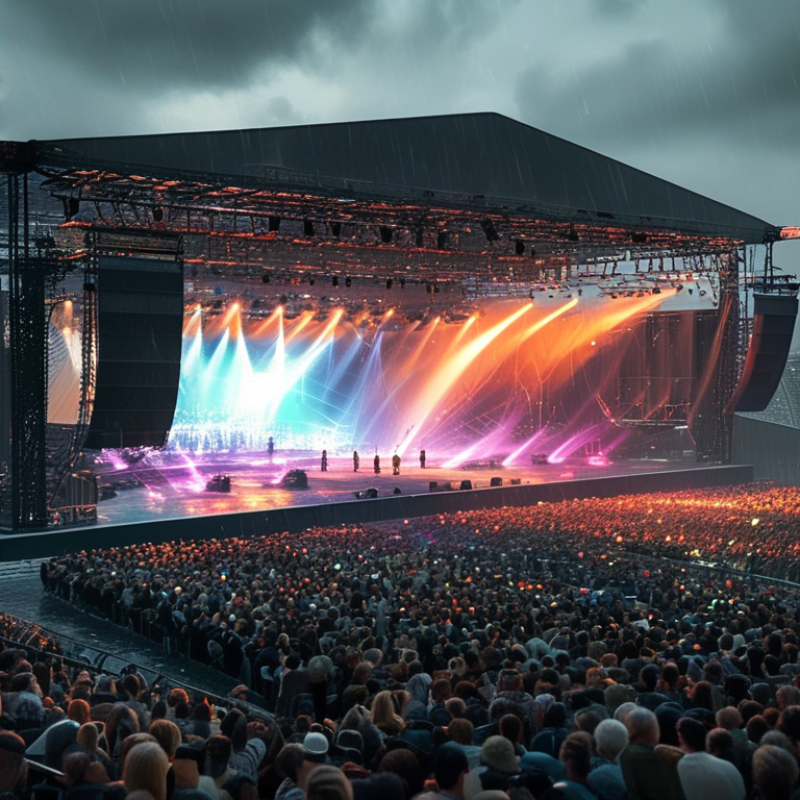
2026 Top Concert Stage Lighting Suppliers for Global Buyers

What Defines a Top Concert Stage Lighting Supplier in 2026

A top concert stage lighting supplier in 2026 understands live production beyond product catalogs. Their team has practical experience with touring shows, outdoor festivals, broadcast stages, and compact indoor venues. They ask about rigging limits, audience distance, power capacity, weather exposure, and camera requirements before suggesting fixtures. That conversation often reveals more than a polished brochure.

Reliable suppliers provide measurable photometric data, color consistency reports, thermal testing results, and clear maintenance guidance. Their fixtures should deliver stable output during long rehearsals, quick color changes, and repeated transport. Flicker control matters for high-speed cameras. Quiet cooling matters in theaters. Weather resistance matters when rain arrives unexpectedly. Safety documentation must be current and easy for production teams to verify.

Strong technical support also defines a leading supplier. Engineers should help with beam calculations, control compatibility, spare-unit planning, and on-site troubleshooting. Response time matters.

Not every decision will be perfect. A brighter fixture may consume more power than a venue can support. A lighter unit may offer fewer effects. Experienced suppliers admit these trade-offs instead of hiding them. They test sample units under real conditions, accept useful criticism, and revise recommendations when the first plan fails. Long-term value comes from honest specifications, dependable service, repairable designs, and training that helps crews work confidently under pressure.

Core Product Categories for Professional Concert Lighting Systems

Professional concert lighting starts with the right product categories, not isolated fixture purchases. Global buyers typically build systems around moving heads, LED wash lights, beam fixtures, and profile fixtures. Each category serves a different visual and technical purpose.

Moving heads create changing aerial effects and precise stage movement. Wash fixtures provide broad color coverage across performers and scenic areas. Beam fixtures produce narrow, high-impact shafts through haze. Profile fixtures shape clean edges, project patterns, and support detailed key lighting. LED bars add continuous color lines along risers, trusses, and stage decks. They are useful, but their output can look flat without careful placement.

Special-effect products also matter. Strobes, blinders, and pixel fixtures help mark musical transitions and audience moments. Followspots remain valuable when a performer must stay visually dominant. Control consoles, network nodes, dimming equipment, and reliable power distribution connect these fixtures into one working system. Safety cables, rigging hardware, and weather protection should never be treated as optional.

In practical venue work, fixture specifications rarely tell the whole story. A brighter unit may create unwanted glare or consume more power. More channels can increase programming demands. I have seen technically impressive systems become difficult to operate under time pressure. Testing color consistency, fan noise, zoom range, service access, and control compatibility before purchase is wiser than trusting a catalog alone. Some choices will still need revision after the first show.

How to Evaluate Supplier Quality, Technology, and Safety Standards

Choosing a stage-lighting supplier starts with evidence, not impressive product photos.

Ask for recent test reports, production records, and customer references from comparable venues. The International Energy Agency reported that LEDs represented more than half of global lighting sales by 2022. However, efficiency claims can hide poor thermal design. Request measured lumen output, color consistency, power consumption, and output after extended operation.

Technology must survive real production pressure.

Check DMX and RDM interoperability, wireless reliability, flicker performance, firmware controls, and spare-part availability. The U.S. Department of Energy’s 2023 solid-state lighting report identifies laboratory LED efficacy above 200 lumens per watt, but stage fixtures rarely deliver that figure in complete systems. That gap matters.

Test a sample for eight hours at full output. Watch fan noise, housing temperature, color drift, and restart behavior.

Safety documentation deserves equal scrutiny.

Confirm compliance with IEC 60598-1, IEC 60529 ingress ratings, IEC 62471 photobiological safety, and relevant local electrical rules. For North American projects, ask whether control equipment aligns with applicable entertainment-technology standards.

Certificates should identify the exact model, revision, test laboratory, and production date. A factory audit is useful, but it is not proof of every shipment’s quality. I have seen excellent prototypes followed by inconsistent batches.

Require pre-shipment inspection, serial tracking, burn-in records, and a clear warranty process. Also review installation instructions; vague load limits can create serious risks above a crowded audience.

Global Sourcing Factors: Pricing, Logistics, Support, and Compliance

2026 Top Concert Stage Lighting Suppliers for Global Buyers

Global buyers should compare more than the unit price of moving lights, strobes, and LED fixtures. A low quote may exclude control consoles, flight cases, spare lamps, testing, or export packaging. Request a detailed pro forma invoice with currency, payment terms, minimum order quantity, warranty coverage, and Incoterms. Calculate the landed cost, including freight, insurance, customs duties, and local taxes.

Logistics can decide whether a show opens on time. Ask suppliers to confirm production capacity, carton dimensions, pallet weight, and realistic lead times. Sea freight may reduce costs, while air freight helps during urgent replacements. Request serial-number lists, packing photos, and tracking documents before shipment. Small omissions create expensive delays. We have seen delivery estimates change after payment, so written milestones matter.

Technical support should include wiring diagrams, fixture profiles, firmware guidance, and prompt troubleshooting. Check whether replacement parts are available locally or shipped internationally. Compliance requires careful verification, not assumptions. Ask for applicable electrical safety reports, electromagnetic compatibility documents, product labels, and region-specific declarations. Confirm the fixture’s voltage, plug type, ingress rating, and flicker performance for your venue. Certification documents can be incomplete or outdated. An independent pre-shipment inspection may cost more, but it can reveal loose connectors, inconsistent color output, or damaged housings before the equipment reaches the stage.

Global Concert Stage Lighting Sourcing Factors

This 100-point buyer evaluation benchmark reflects the practical priorities used when comparing international stage-lighting suppliers. Landed cost includes product price, freight, duties, and payment terms; logistics covers lead time, export handling, and delivery reliability; compliance covers applicable electrical, safety, EMC, and environmental documentation; technical support includes installation guidance, spare parts, warranty response, and after-sales service.

Benchmark weighting for procurement planning; it does not represent the performance of any specific company or brand.

Key Trends Shaping the Concert Stage Lighting Market in 2026

In 2026, concert stage lighting is becoming more intelligent, efficient, and visually precise. LED fixtures now deliver brighter output with lower power consumption. This matters for touring productions facing strict energy budgets and smaller venues. Field experience shows that heat management remains important. A powerful fixture is not useful when cooling noise disrupts quiet moments.

Pixel-controlled luminaires are shaping creative planning. Designers can map colors across a stage, backdrop, or moving structure. Faster wireless control is also gaining attention, especially for temporary outdoor events. Yet wireless systems are not perfect. Signal congestion can still create stressful delays during a live performance. Reliable suppliers should offer wired backup options, tested protocols, and clear technical documentation.

Automation and data-based programming are expanding in 2026. Software can match lighting changes with music cues, performer movement, and audience sightlines. However, automation should support experienced operators, not replace them. Human judgment remains essential when weather, equipment position, or artistic timing changes unexpectedly. Sustainability is another major market trend. Global buyers increasingly examine fixture lifespan, repair access, packaging, and replacement-part availability. Compliance documentation also deserves close attention. Suppliers serving international projects should provide safety certifications, voltage guidance, installation instructions, and responsive after-sales support. Product samples, photometric data, and realistic delivery schedules help buyers compare equipment beyond attractive showroom images.

2026 Top Concert Stage Lighting Suppliers for Global Buyers - Key Trends Shaping the Concert Stage Lighting Market in 2026

Global buyers can use the following supplier capability and product specification benchmarks when evaluating concert stage lighting suppliers in 2026. The figures represent commonly specified professional requirements and planning ranges rather than company market-share data.

Supplier / Product Area 2026 Buyer Priority Typical Professional Specification Relevant Standards or Protocols Main Concert Use Procurement Checks
LED Moving-Head Fixtures High output with lower power consumption LED source; continuous pan and tilt; motorized zoom; calibrated color control; RDM support DMX512-A; RDM; applicable IEC 60598 safety requirements Large touring shows, arenas, festivals and broadcast stages Photometric data, noise level, fixture weight, service access and spare-parts availability
LED Profile and Spot Fixtures Precise beam shaping and consistent color Motorized focus and zoom; framing shutters; gobo capability; color temperature control; CRI commonly 90 or higher for camera-critical work DMX512-A; RDM; photobiological safety assessment under IEC 62471 where applicable Key light, performer isolation, follow-spot replacement and scenic projection Beam angle, lumen maintenance, color consistency, shutter accuracy and lens availability
LED Wash and Blinder Fixtures Wide coverage, saturated color and audience impact RGBW, RGBA or multi-emitter LED engine; wide zoom or fixed flood angle; strobe and pixel-control functions DMX512-A; RDM; optional Art-Net or sACN integration through the control system Backlight, audience wash, cyc lighting, stage borders and camera effects Color mixing method, minimum dimming level, beam uniformity, thermal management and IP rating
Pixel Bars and Linear LED Fixtures Pixel mapping and scalable visual content Individually controllable pixels or segments; RGB, RGBW or RGBA emitters; flexible mounting and rotation options DMX512-A; Art-Net; sACN; media-server compatibility through the lighting network LED walls, scenic structures, risers, trusses and synchronized music visuals Pixel addressing, refresh behavior, data redundancy, mounting hardware and replacement modules
Outdoor and Weather-Resistant Fixtures Reliable operation for festivals and temporary outdoor events IP65 or higher commonly requested for exposed positions; sealed connectors; corrosion-resistant housing; temperature monitoring IEC 60529 ingress-protection classification; local electrical and event-safety requirements Outdoor festivals, stadium shows, city events and touring productions Verified IP test documentation, drainage design, cable glands, wind exposure and cleaning procedures
Lighting Consoles and Control Systems Fast programming, show-file security and network scalability Support for multiple universes; cue, playback and effects engines; offline programming; backup or tracking functionality DMX512-A; RDM; Art-Net; sACN; timecode integration where required Touring control, festival changeovers, broadcast and permanent venues Operator training, software-update policy, file compatibility, technical support and backup workflow
Lighting Network Nodes and Data Distribution Stable data delivery and easier system expansion Ethernet-to-DMX conversion; configurable universes; status monitoring; isolated outputs; managed-network compatibility Art-Net; sACN; DMX512-A; RDM; Ethernet network practices suitable for live production Large touring rigs, multi-stage festivals and distributed venue systems Port redundancy, VLAN support, configuration backup, latency and troubleshooting tools
Wireless DMX Solutions Reduced cabling for temporary and hard-to-reach positions Bidirectional or monitored wireless links; frequency-management controls; line-of-sight planning; wired fallback options DMX512-A transport; regional radio-spectrum rules; site-specific frequency coordination Temporary stages, architectural elements, moving scenic pieces and retrofit projects Operating frequency, range under real venue conditions, encryption, interference handling and fail-safe behavior
Power Distribution and Touring Infrastructure Electrical safety, fast deployment and load visibility Circuit protection; current monitoring; suitable connector systems; clear load labeling; modular touring construction Applicable IEC, EN, NEC or local electrical codes; venue-specific inspection requirements Touring systems, festivals, arenas and temporary outdoor installations Input voltage, phase balance, residual-current protection, connector compatibility and inspection records
Sustainable and Low-Impact Lighting Packages Lower energy use, longer service life and reduced logistics impact High-efficiency LED sources; power-saving modes; repairable modules; recyclable packaging; reduced fixture weight where practical Local energy, waste, recycling and product-compliance requirements; documented environmental claims Touring productions, green festivals, permanent venues and public events Real power draw, expected lifetime, repair policy, packaging materials, spare-part supply and end-of-life handling
Supplier Service and Global Delivery Shorter replacement time and consistent international support Documented warranty terms; regional technical support; multilingual manuals; production testing; export-ready packaging Destination-country customs, electrical, radio and product-safety requirements International tours, rental fleets, integrators and venue operators Lead time, minimum order quantity, sample availability, factory acceptance testing, warranty response and spare inventory
Key 2026 market trends: LED efficiency and color quality, pixel-level control, IP-rated outdoor fixtures, networked control using Art-Net and sACN, wireless data for temporary installations, flicker-aware camera production, modular repairability and lower-energy touring systems.

FAQS

: What should a professional lighting supplier understand before recommending fixtures?

: They should ask about rigging limits, audience distance, power capacity, weather exposure, and camera needs. Good advice starts with questions. A catalog cannot show everything.

Which lighting fixtures are common in concert systems?

Common categories include moving heads, LED wash lights, beam fixtures, profile fixtures, LED bars, strobes, and blinders. Each fixture serves a different purpose. No single unit does everything.

What does each main fixture type do?

Moving heads create movement and aerial effects. Wash lights cover performers and scenery with broad color. Beam fixtures create narrow shafts through haze. Profile fixtures shape edges and project patterns.

Why are testing and photometric data important?

Suppliers should provide measurable output data, color consistency reports, thermal tests, and maintenance guidance. Test sample units before purchase. Real conditions reveal weaknesses.

What technical features matter for live concerts?

Flicker control supports high-speed cameras. Quiet cooling helps theaters. Weather resistance protects equipment during sudden rain. Stable output matters during long rehearsals and repeated transport.

How should suppliers support production teams?

Engineers should assist with beam calculations, control compatibility, spare-unit planning, and troubleshooting. Fast responses reduce pressure. Training also builds crew confidence.

What trade-offs should buyers consider?

A brighter fixture may use more power. A lighter unit may provide fewer effects. More channels can increase programming work. There is rarely a perfect choice. That matters.

How can buyers avoid difficult systems after installation?

Check color consistency, fan noise, zoom range, service access, control compatibility, and power needs. The first plan may fail. Honest suppliers revise recommendations after testing.

Conclusion

In 2026, a top Concert Stage Lighting supplier is defined by reliable product quality, advanced technology, strong manufacturing capabilities, and consistent professional support. Leading suppliers typically offer a complete range of solutions, including moving head lights, LED wash and profile fixtures, beam lights, follow spots, strobes, effect lights, control consoles, trusses, and compatible accessories. Their products should deliver accurate color performance, efficient power usage, durable construction, flexible programming, and stable operation in demanding live-event environments.

Global buyers should evaluate suppliers through product testing, certifications, safety systems, quality control procedures, warranty policies, and technical support. Pricing should be considered alongside production capacity, lead times, packaging, shipping options, spare parts availability, and after-sales service. Import requirements and regional compliance are also essential for smooth purchasing. In addition, the 2026 market is being shaped by energy-efficient LED technology, intelligent automation, wireless control, immersive visual design, sustainable production, and increasingly integrated lighting systems that improve creativity, efficiency, and audience experience.


Henry

Henry

Henry is a dedicated marketing professional with a profound expertise in the company's offerings. With years of experience in the industry, he possesses an impressive understanding of the market dynamics and consumer behaviors that drive success. Henry is committed to sharing his insights through......