How to Choose the Best China Show Lighting System?

Time:2026-10-17 Author:Amelia
0%

Choosing the right Show Lighting System involves more than comparing fixture brightness or product prices. A professional system must suit the venue, audience, performers, and production schedule. A 2000-seat theater needs different optics from a compact exhibition booth. Ceiling height, beam angle, power distribution, control protocols, and emergency access all influence performance.

Energy efficiency also deserves serious attention. The U.S. Department of Energy states that LED lighting can use at least 75% less energy than incandescent lighting and last considerably longer. That difference matters during long rehearsals, touring productions, and repeated event installations. The 2024 UFI Global Exhibition Barometer also identifies sustainability as an important priority for exhibition professionals. However, efficient equipment is not automatically suitable. Poor color rendering, visible flicker, or limited dimming can damage the audience experience.

Look beyond technical claims.

This guide examines photometric data, CRI and TM-30 performance, flicker control, IP ratings, DMX or Art-Net compatibility, and fixture maintenance. It also considers real operating details, such as replacing a lamp during a tight setup window or tracing a failed data connection backstage. Reports from Grand View Research and other market analysts show continued growth in LED and event-lighting applications, but market growth does not guarantee product quality. Specifications can be incomplete, and some decisions still require testing. A practical demonstration, measured lux output, and a written warranty may reveal more than a polished brochure. The best choice balances visual control, reliability, service support, energy use, and the venue’s actual limitations.
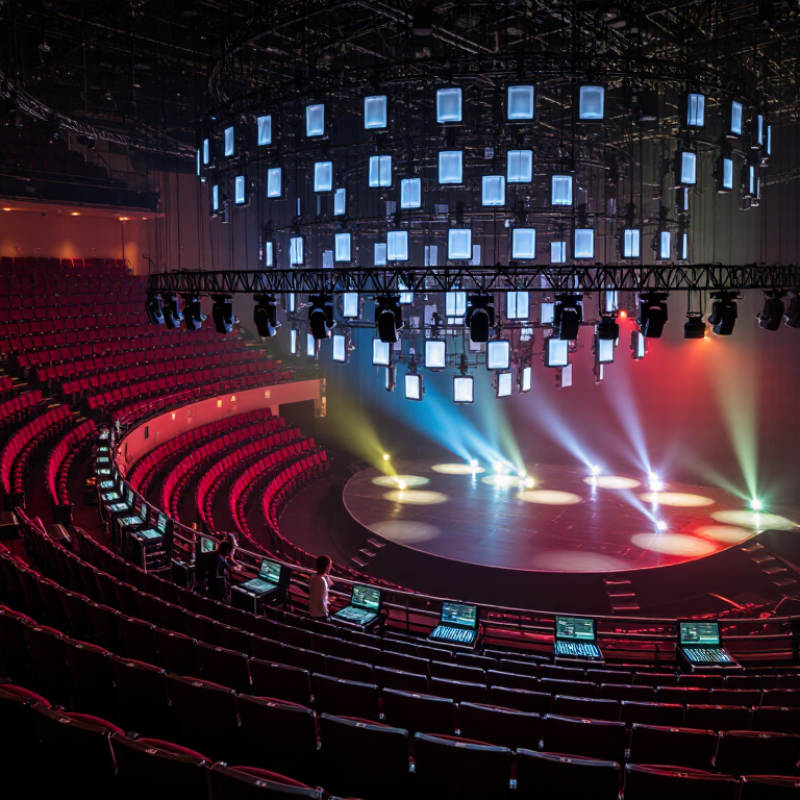
How to Choose the Best China Show Lighting System?

Define the Show’s Lighting Goals and Performance Requirements

Before comparing a China show lighting system, define what the audience must feel and see. A product may look powerful, yet fail during a quiet speech. Write the show’s main goals in measurable terms. A concert may need vivid color changes, sharp beams, and fast movement. A conference needs natural faces and readable slides. That difference changes the entire system and budget.

Measure the venue before choosing equipment. Record stage width, ceiling height, viewing angles, ambient light, and available power. A small hall may need soft, wide coverage instead of narrow, high-output beams. An outdoor stage needs weather protection, stable rigging, and reliable control connections. Ask for photometric data, color-rendering figures, dimming behavior, and operating noise. Confirm electrical ratings with a qualified technician. Check whether fixtures maintain consistent color at low intensity.

Build a short mock-up with two or three candidate fixtures. Watch skin tones from the back row. Test a slow fade. Then test a sudden blackout. In real productions, small delays can disturb cues and camera images. I have seen teams choose output numbers first, then discover poor coverage. That choice looked efficient, but created more work. During testing, note what feels wrong, not only what looks impressive. Leave room for adjustment. The best system may be less dramatic, but steadier and easier to control.

Compare Key Lighting Types for Different Show Environments

How to Choose the Best China Show Lighting System?

Compare Key Lighting Types for Different Show Environments

Choosing a China show lighting system starts with the venue, not fixture brightness. A touring concert needs fast movement, strong beams, and weather-resistant housings. A theatre needs controlled edges, quiet fans, and accurate skin tones. Exhibitions usually benefit from soft, even illumination with limited glare. The 2023 U.S. Department of Energy Solid-State Lighting R&D Plan targets 250 lumens per watt for future LED systems. That figure is useful, but it is not an installed-system promise.

Moving-head fixtures suit concerts and large stages because they combine beam, spot, and wash functions. Profile fixtures create sharp projections for theatre and corporate presentations. Fresnels produce gentle pools on faces, while PAR fixtures cover broad scenic areas. For camera-heavy shows, check flicker performance, not only CRI. The IEEE 1789 guidance links visible modulation with potential health concerns, so testing at actual frame rates remains essential.

I have learned not to specify every fixture at maximum output. Excessive brightness can flatten scenery and tire audiences. Instead, compare beam angles, zoom ranges, color consistency, noise levels, and DMX or network control. TM-30 data can reveal color fidelity more clearly than CRI alone. This is where my earlier choices were imperfect: a cheaper, brighter light sometimes created harsher shadows and more programming work. A balanced system usually performs better across changing show environments.

Evaluate Brightness, Color Quality, Control, and Energy Efficiency

How to Choose the Best China Show Lighting System?

A reliable show lighting system begins with measured brightness, not attractive specifications. For exhibition halls, compare maintained illuminance in lux across the audience area. Measure the front row, center, and rear seats. The U.S. Department of Energy’s 2023 Solid-State Lighting R&D Plan identifies over 200 lumens per watt as a development target. However, high efficacy alone cannot prevent glare or uneven facial lighting. I have found that a slightly lower output often looks better when beam angles are selected carefully.

Color quality deserves equal attention. CRI can hide weak red reproduction. Use IES TM-30 measurements, especially Rf and Rg, alongside CIE color coordinates. TM-30 helps reveal whether skin tones appear dull, green, or overly saturated.

Aim for stable color across fixtures and dimming levels. Check samples at 3,200K, 4,000K, and daylight conditions. Small differences become obvious on cameras.

Control and energy efficiency affect daily operation. The IEC 62386-based DALI-2 framework supports addressable dimming and scene control. Confirm compatibility before installation. Use occupancy sensors and daylight response where the venue allows them. The International Energy Agency reports that lighting still represents roughly 10% of global electricity demand. That figure makes control strategy practical, not decorative. I still make one mistake: judging fixtures only during a bright demonstration. Test them after two hours, at low intensity, with real content and operators. Performance can change.

Check System Compatibility, Installation Needs, and Maintenance

Choosing the best China show lighting system requires more than comparing brightness and price. Check compatibility before ordering. Confirm the control protocol, dimmer capacity, voltage, connector type, and fixture power. A lighting desk may support a familiar signal, yet still fail with certain addressing functions. Test one fixture with the complete control chain, including splitters and cables. This small trial can reveal flicker, delayed responses, or unexpected channel limits.

Installation needs deserve equal attention. Measure the venue’s ceiling height, rigging points, cable paths, and available power outlets. Make sure the structure can safely carry the lighting load. Leave space around fixtures for heat removal and future access. A qualified electrician should verify electrical connections according to local requirements. Label every cable at both ends. It saves time during rehearsals. I once trusted a neat-looking cable plan and missed a blocked maintenance hatch. The mistake was simple, but expensive to correct.

Maintenance should fit the venue’s real working conditions. Dusty stages need regular lens and air-intake cleaning. Inspect connectors, clamps, fans, and safety attachments before each production. Keep a service log with operating hours, faults, repairs, and replacement dates. Store spare cables, fuses, and a compatible backup control unit nearby. Firmware updates may improve performance, but test them away from a live show. Check twice. A practical system is not always the newest one; it is the one your crew can install, inspect, and repair confidently.

Assess Suppliers, Safety Standards, Budget, and Long-Term Value

Choosing the best China show lighting system starts with supplier evidence, not attractive product photos. A dependable supplier should provide clear specifications, factory quality procedures, test reports, and responsive technical support. Ask for evidence. Request samples before placing a large order, then inspect brightness, color consistency, connectors, and housing quality. A supplier that explains limitations honestly often deserves more trust than one promising perfect results.

Safety must fit the venue and destination country. Confirm electrical protection, grounding, thermal management, cable ratings, and emergency shutoff options. Review relevant certification documents with a qualified local professional. Do not rely on printed marks alone.

Measure the heat. During a practical test, run fixtures for several hours and check unusual noise, flickering, hot surfaces, or loose connections. These details can expose weaknesses that a short demonstration hides.

Budget planning should include installation, control equipment, spare units, transport, maintenance, and possible customs costs. The lowest quotation may become expensive after repeated repairs or difficult communication. Compare warranty length, replacement procedures, software support, and delivery reliability. Ask how quickly common parts can be supplied. Keep records. A simple cost-per-show calculation can reveal long-term value more clearly than the purchase price.

I once underestimated training time, and the project needed extra labor. That mistake changed my evaluation process. A system is valuable when crews can operate it safely, repair it reasonably, and depend on consistent performance across many events.

FAQS

How should I choose lighting for a concert venue?

Choose moving fixtures with fast movement, strong beams, adjustable zoom, and weather-resistant housings. Check outdoor protection carefully. Brightness alone is insufficient.

What lighting works best for theatre productions?

Profile fixtures create sharp projections, while Fresnels provide soft facial light. Prioritize quiet fans, controlled edges, and natural skin tones.

Which fixtures suit exhibitions and display areas?

Use soft, even lighting with limited glare. Gentle illumination helps visitors view products without harsh reflections or tired eyes.

Should I select fixtures by maximum brightness?

No. Excessive output can flatten scenery and fatigue audiences. Compare beam angles, color consistency, noise, and control options.

Why does flicker performance matter for filmed shows?

Cameras can reveal flicker that audiences barely notice. Test fixtures using the actual camera frame rates and shutter settings.

What compatibility checks should happen before installation?

Confirm control signals, dimmer capacity, voltage, connectors, and fixture power. Test one complete chain with cables and signal splitters.

What venue measurements affect installation?

Measure ceiling height, rigging points, cable paths, power outlets, and maintenance access. Leave space around fixtures for heat removal.

How can a crew maintain lighting reliably?

Clean lenses and air intakes regularly. Inspect clamps, fans, connectors, and safety attachments before each production. Keep service records.

What mistakes should buyers avoid?

Do not assume a neat cable plan is complete. I once missed a blocked maintenance hatch. The correction cost time and money.

Is the newest lighting system always the best choice?

Not always. Choose equipment your crew can install, inspect, program, and repair confidently. Newer does not mean easier.

Conclusion

Choosing the best Show Lighting System begins with clearly defining the event’s purpose, venue, audience, and performance requirements. Consider whether the system is intended for concerts, theater, exhibitions, presentations, or outdoor events, as each environment may require different lighting types, beam angles, color effects, and coverage. Compare available fixtures based on brightness, color accuracy, dimming performance, control flexibility, energy efficiency, and the ability to create a consistent visual atmosphere.

It is also important to review compatibility with existing control equipment, power supplies, rigging structures, and installation conditions. Select a system that is practical to operate, easy to maintain, and supported by reliable technical service. Safety certifications, durable construction, warranty terms, replacement parts, and supplier experience should be evaluated alongside the initial budget. A well-planned Show Lighting System should deliver strong performance while reducing energy use, maintenance demands, and long-term operating costs. The best choice is not always the cheapest option, but the one that provides dependable quality, safe operation, and lasting value for the entire production.


Amelia

Amelia

Amelia is a seasoned marketing professional with a wealth of expertise in our company’s core offerings. With an unwavering passion for driving growth and innovation, she plays a pivotal role in shaping our marketing strategies and enhancing brand visibility. A key aspect of her responsibilities......