Why Is Theater Lighting Important for Global Buyers?

Time:2026-09-27 Author:Henry
0%

Why Is Theater Lighting Important for Global Buyers? The answer reaches beyond brightness. Theater Lighting shapes visibility, mood, timing, and audience attention. It can turn a quiet face into the emotional center of a crowded stage. It can also hide detail when poorly selected.

Lighting designer and educator Stanley McCandless famously stated, “The primary function of light is to make the actors visible.” His principle remains practical for international buyers. A fixture must reveal skin tones accurately, control shadows, and maintain consistent output across performances. Color rendering matters. Flicker matters more than many first-time buyers expect. So does quiet operation.

Global purchasing adds practical concerns. Buyers compare LED efficiency, beam angles, dimming behavior, control compatibility, and service support. A venue in London may require different electrical planning from one in Singapore or Toronto. Regional voltage, connectors, safety documentation, and local installation rules deserve careful review. Certifications help. They do not replace testing.

Experienced buyers request photometric data, warranty terms, spare-part access, and sample demonstrations. They also ask how products behave after long rehearsals and repeated programming changes. A low purchase price can become expensive when fans fail or color shifts appear. That lesson is easy to overlook.

Theater Lighting is not merely equipment above the stage. It is a visual language supported by engineering. Reliable products protect creative decisions and operational budgets. Still, no fixture suits every venue. Buyers must question specifications, verify supplier claims, and involve lighting designers early. The best choice is rarely the brightest one. It is the one that performs predictably, safely, and convincingly.
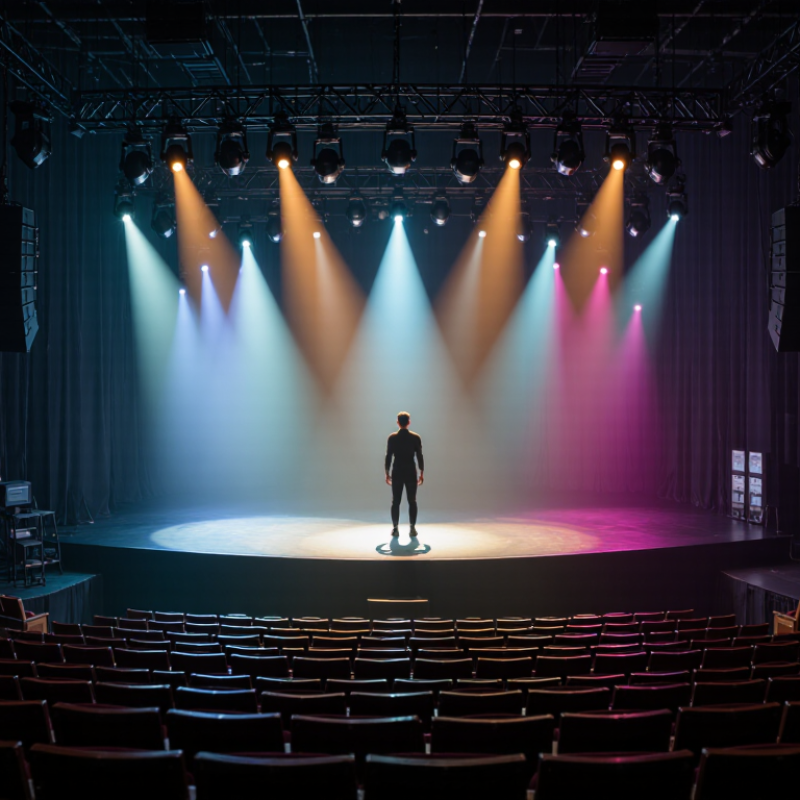
Why Is Theater Lighting Important for Global Buyers?

What Theater Lighting Is and How It Works

Theater lighting is a coordinated system of fixtures, lenses, power, and controls that makes performers and stage details visible. It also shapes mood and directs attention. A warm wash can suggest a late afternoon, while a narrow, cool beam can isolate one actor. Light shapes attention.

A typical setup includes front lights for visibility, side or back lights for depth, and softer washes across the stage. Each fixture uses optics to focus or spread its beam. Color may come from filters or be mixed electronically, depending on the equipment. A lighting console stores cues, such as a gradual fade during a scene change. Control signals tell compatible fixtures when to dim, change color, or move. The result depends on placement as much as programming.

For global buyers, understanding this chain helps when comparing equipment for different venues. A small theater may need quiet, flexible fixtures, while a large hall may require brighter output and longer throws. Check power requirements, control compatibility, beam angles, and service support before specifying a system. Work with qualified technicians on installation and rigging. Product data alone can be misleading; room tests often reveal glare, shadows, or colors that look different on stage. That gap deserves attention.

The Core Functions of Lighting in a Theater Production

Theater lighting does more than make performers visible. It guides the audience’s eyes toward a face, doorway, or small object. Light shapes attention. A warm wash can suggest late afternoon, while a narrow, cool beam can isolate a tense moment. These choices help audiences read mood and action, even from the back row. Color is useful, but intensity, angle, and contrast matter just as much.

Lighting also supports movement and timing. A slow fade can soften a scene change; a sharp blackout can mark its end. Accurate focus keeps light off scenery that should remain dim. Crews test cues with actors, costumes, and set surfaces in place. Pale fabric may reflect more light than expected. Small adjustments matter. For buyers comparing equipment across venues, consistent dimming, clear photometric data, manageable heat, and quiet operation are practical criteria. Specs alone cannot predict every room.

Tips: During rehearsal, check faces from several seats, not only the control desk. Record fixture positions and cue levels, then retest after scenery changes. Leave room for correction; a perfect paper plan can still look wrong onstage.

How Lighting Shapes Mood, Focus, and Audience Experience

Lighting does more than make performers visible. A warm side light can soften a quiet conversation, while a narrow, cooler beam can isolate a figure against a dark stage. Small changes matter. A face in shadow may feel distant, even when the actor is speaking clearly. Mood is shaped by angle, intensity, color, and timing—not color alone.

Light also guides attention. A gradual shift can lead the eye toward a doorway before a character enters; a sudden blackout can create a sharp pause. But too much contrast may hide expressions or make movement hard to follow from the rear seats. Lighting teams often test cues from several viewing positions, not just beside the control desk. The audience notices the effect, not the equipment.

Buyers comparing systems should consider smooth dimming, consistent color, quiet operation, and service access alongside brightness. A fixture may look impressive on a specification sheet yet perform poorly when faces appear uneven or colors shift between units. Venue size, ceiling height, and local power conditions also shape the result. There is no universal setting. A practical review should include a sample scene, measured output, and feedback from operators and viewers. Even then, judgment remains partly subjective; one successful demonstration may not reveal how a system will perform during a full season.

Why Is Theater Lighting Important for Global Buyers? - How Lighting Shapes Mood, Focus, and Audience Experience

Lighting purpose Common lighting approach Effect on mood and focus Audience experience What buyers should check
Make performers visible Front and side lighting, selected to suit the stage size, performer movement, and sightlines. Clear, balanced illumination helps audiences follow faces, gestures, and movement. Easier viewing without making every scene feel equally bright or flat. Check usable output, beam control, focusability, mounting options, and whether the fixture suits the venue’s throw distances.
Direct attention Spotlights, shutters, gobos, or narrower beams to highlight a performer or stage area. A contrast between the focal area and its surroundings can guide the eye and support scene changes. The audience is more likely to notice the intended action, subject to viewing angle and stage design. Review beam angle, edge quality, shutter or framing features, and spill control in a demonstration or photometric data.
Set atmosphere Changes in color, intensity, direction, and contrast; color may come from a source, filter, or LED mixing system. Warmer or cooler-looking light and changes in contrast can help communicate a scene’s tone. Visual transitions can support the production’s setting and emotional pacing. Assess color consistency, available color control, fade behavior, and how colors render on performers and scenery.
Support natural-looking color White-light sources selected for the production’s color requirements; color quality can be evaluated using metrics such as CRI or TM-30. Color quality affects how costumes, makeup, skin tones, and scenery appear under the light. More reliable color appearance can help maintain the intended visual design. Request test data for the relevant operating mode; a single color-rendering score does not describe every color or viewing condition.
Create smooth transitions Dimming and programmed changes in intensity, color, or position, coordinated with the production’s control system. Gradual changes can support shifts in time, place, or emotion; abrupt changes can be used when the production calls for them. Consistent transitions help the visual cues work with the action rather than distract from it. Test low-level dimming, fade smoothness, fan noise where relevant, and compatibility with the existing control setup.
Integrate across venues and regions Fixtures and controls specified for the venue’s electrical supply, rigging, environment, and chosen control protocol. Reliable operation makes lighting cues easier to reproduce across rehearsals and performances. Fewer compatibility issues help protect the intended show experience. Confirm local voltage and frequency, applicable safety certifications, connector requirements, DMX/RDM support if needed, service access, and warranty terms.

Note: Lighting results depend on the venue, fixture placement, stage materials, control settings, and production design. Evaluate equipment in the intended setup wherever possible.

Key Theater Lighting Equipment and Control Systems

A theater lighting system begins with the fixtures: profile spots shape crisp edges, Fresnels soften faces, and wash lights cover larger areas. LED fixtures can reduce heat and simplify color changes, but their output and color quality vary. Check beam angle, brightness, dimming behavior, and cooling noise in a real room. A bright fixture on paper may still look weak through a long throw.

The control system turns equipment into repeatable cues. A lighting console stores scenes, while dimmers or fixture electronics regulate output. DMX is common for sending control data; larger rigs may use networked protocols for more channels and flexible routing. Buyers should confirm connector types, power requirements, control compatibility, and service support before ordering. Keep spare cables and document patch settings. Small oversights matter. I have seen a simple address mismatch delay a rehearsal, and it is easy to miss during a busy installation.

Tips: Test one fixture with the intended console before purchasing a full set. Label cables at both ends, leave room for safe cable runs, and save a backup copy of the show file. Ask suppliers for clear technical documentation; vague specifications deserve a second look.

What Global Buyers Should Consider When Selecting Lighting Systems

Selecting a theater lighting system starts with the room, not the fixture catalog. Measure stage width, ceiling height, and the distance from each hanging position to the acting area. A narrow beam can isolate a performer; a wider field may cover scenery more evenly. Ask for photometric data at realistic distances, then compare it with a mock-up or on-site test. Specs can look reassuring on paper.

Global buyers should check voltage compatibility, dimming behavior, control options, and heat output before ordering. Confirm that fixtures work with the venue’s existing console and cabling, or budget for adapters and control upgrades. Ask how firmware updates are handled and whether replacement parts can be shipped reliably. A low purchase price may become expensive when a failed unit delays a production. Details matter.

Request clear documentation, warranty terms, packing dimensions, and realistic lead times. For touring venues, weight and mounting hardware affect labor as much as brightness. For permanent installations, service access and fan noise deserve attention; a quiet stage is not a small luxury. Test it live. Color differences between fixtures may only become obvious on a pale backdrop during a slow fade. I would still verify consistency in the actual room.

Why Theater Lighting Matters to Global Buyers

Check local power compatibility before selecting theater lighting systems. The chart shows representative nominal single-phase supply voltages in selected markets.

Venue power systems may also use other configurations, such as 120/208 V or 230/400 V. Confirm the venue’s supply, fixture input range, connectors, and local electrical requirements before purchasing.

FAQS

What does theater lighting do beyond making performers visible?

It directs attention toward a face, doorway, or small prop. Light shapes attention.

How do different fixtures affect the stage?

Profile spots create crisp edges, Fresnels soften faces, and wash lights cover wider areas. Placement changes the result.

How can color and brightness suggest a mood?

A warm wash can suggest late afternoon. A narrow, cool beam can isolate one actor.

What should a theater consider when choosing fixtures?

Check brightness, beam angle, dimming behavior, heat, and cooling noise. Test the throw in the actual room.

How do lighting controls manage scene changes?

A console stores cues, such as gradual fades or blackouts. Dimmers or fixture electronics adjust output.

What should buyers check before connecting equipment?

Confirm power needs, connector types, and control compatibility. Test one fixture with the intended console.

Why do lighting tests need actors and scenery?

Pale fabric may reflect more light than expected, creating glare or unwanted shadows. Paper plans can miss this.

What helps prevent problems during setup and rehearsal?

Label cables at both ends, document patch settings, and save a backup show file. Small details matter.

How should crews judge a lighting cue?

Check faces from several seats, not only the control desk. I still sometimes trust the paper plan too much.

Conclusion

Theater Lighting is more than a way to make a stage visible. It helps audiences follow the action, directs attention to important moments, and supports the story’s mood and atmosphere. By combining light intensity, color, direction, and timing, a production can create contrast, suggest different settings, and make performances feel more engaging. Effective lighting works in coordination with performers, scenery, sound, and other production elements.

A theater lighting system may include fixtures, lenses, dimmers, cabling, and control consoles, each contributing to how light is shaped and managed. For global buyers, selecting a system involves considering venue size, production needs, equipment compatibility, ease of operation, maintenance, energy use, and available technical support. A well-matched solution can help a theater deliver consistent results across different performances while making efficient use of its budget and resources.


Henry

Henry

Henry is a dedicated marketing professional with a profound expertise in the company's offerings. With years of experience in the industry, he possesses an impressive understanding of the market dynamics and consumer behaviors that drive success. Henry is committed to sharing his insights through......