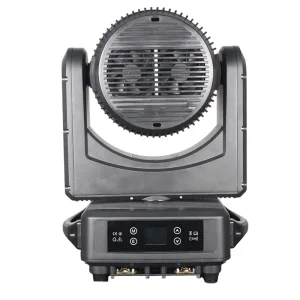
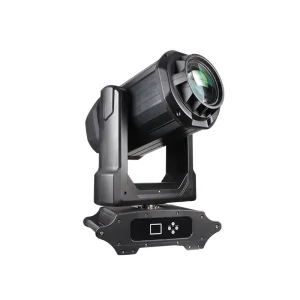
Explore our leading range of professional stage, wash, and architectural lights designed for robust indoor and outdoor applications.
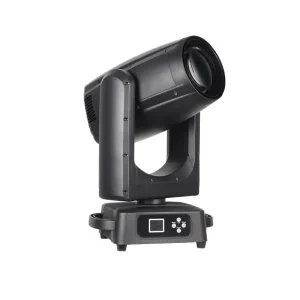
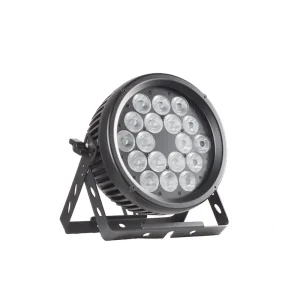
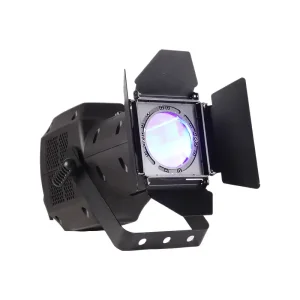
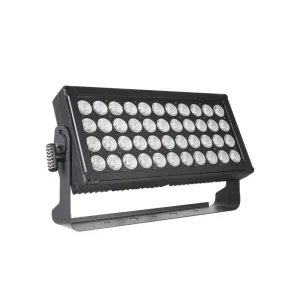
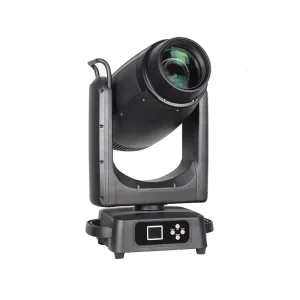
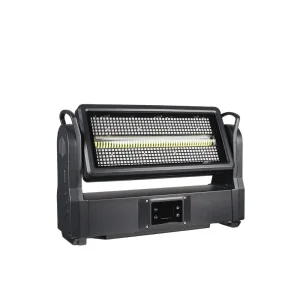
An inside look into modern optoelectronics manufacturing, structural engineering, and standard compliance.
Established in 2014, iTOPLITE (Guangzhou iTOPLITE Technology Co., Ltd.) has emerged as a prominent manufacturing enterprise within the specialized field of optoelectronics. Over the years, the company has been dedicated to the engineering and production of a diverse range of high-end and mid-range products, with a particular focus on stage lights, LED wash and profile luminaires, and comprehensive custom lighting systems. The mission driving iTOPLITE is clear: to offer global enterprise buyers, lighting designers, and distribution channels a seamless, one-stop solution experience that satisfies every stringent regulatory and aesthetic requirement.
In the modern commercial lighting landscape, selecting the right manufacturers involves evaluating parameters beyond brightness and beam angles. High-stakes installation projects demand verified safety parameters, comprehensive electromagnetic stability, environmental protection barriers, and long-term durability. Our manufacturing facility in Guangzhou coordinates design, hardware testing, software development, and quality auditing under ISO9001 and ISO14001 certification frameworks to address the pain points of the global import ecosystem.
For architectural project managers and staging hire operations in the European Economic Area (EEA), CE Certification is not merely a label—it is a mandatory legal passport. The CE mark represents a manufacturer’s declaration that the product complies with the essential health, safety, and environmental protection requirements of all applicable European Union directives.
Indoor and outdoor luminaires operate under varying voltages, typically between 50 to 1000 volts alternating current (AC) or 75 to 1500 volts direct current (DC). The LVD directive ensures that the electrical components, mechanical insulation, and power supplies of iTOPLITE fixtures (such as the 800W Moving Head LED or the 550W Waterproof Moving Profile) protect users from electric shock, physical contact hazards, and thermal radiation fire risks. Creepage distances, solid insulation thickness, and earth ground loop continuity are measured continuously at our QA stations.
Modern high-frequency switching power supplies used in LED fixtures can generate harmonic noise, which may pollute local electrical networks. This interference can corrupt DMX512 data paths or disrupt nearby sound systems. Compliance with the EMC Directive requires rigorous testing of conducted and radiated emissions. Our hardware design incorporates specialized filtering networks and shielded internal compartments to ensure that fixtures emit no electromagnetic interference (EMI) and possess adequate immunity to external electrostatic discharges (ESD).
Eco-conscious projects require materials that restrict the use of hazardous substances. The RoHS directive prohibits lead, mercury, cadmium, and polybrominated biphenyls in components like circuit boards and aluminum casings. At iTOPLITE, raw material validation via X-ray fluorescence (XRF) screening ensures that our components remain environmentally benign, aligning with global green building standards.
The global dominance of Chinese lighting manufacturing stems from integrated supplier ecosystems, raw material proximity, and specialized optical engineering expertise. Guangzhou, home to iTOPLITE's headquarters, sits at the center of this industrial infrastructure.
Direct proximity to die-cast aluminum mills, PCB fabrication facilities, and LED chip packagers minimizes transport time, allowing iTOPLITE to accelerate product iterations and customization cycles.
Our engineering team operates custom environmental chambers, integrating goniophotometers, integrating spheres, vibration tables, and high-pressure water spray booths to validate IP ratings.
ISO9001 and ISO14001 compliance underpins every assembly process, from incoming raw material inspection to final 48-hour burn-in cycles for every moving head.
The iTOPLITE Advantage lies in our ability to merge this supply network with rigorous quality control. Rather than relying on standard components, we design our own cooling pathways, optical lens arrays, and control algorithms. This ensures that every 420W Waterproof Moving Beam or High-Power LED Wash Light achieves consistent color rendering, stable pan/tilt operation, and maximum lumen-per-watt efficiency.
When purchasing managers evaluate suppliers for municipal parks, commercial facades, or large event rental inventories, they focus on several key technical indicators:
The architectural and entertainment lighting sectors are transitioning toward smart, highly integrated solutions. Key trends shaping development include:
Modern fixtures are moving beyond basic RGB color mixing. Incorporating white, amber, lime, or cyan LEDs expands the color gamut, allowing for rich, saturated colors alongside high-CRI white light (CRI > 90). This flexibility is vital for television studios and high-end facade lighting projects where color accuracy is paramount.
Direct DMX control over individual LED pixels within a wash or strobe array enables the display of complex volumetric patterns and video-mapped content. Software integrations allow designers to treat fixtures like low-resolution video displays, opening up creative possibilities for festivals and architectural facade projects.
Eliminating physical control cables simplifies installations. Integrating CRMX (LumenRadio) or W-DMX modules into outdoor fixtures ensures interference-free, long-range wireless data transmission, reducing installation costs and labor for temporary events.
Different installation environments present distinct challenges for lighting designers. Below are typical scenarios where iTOPLITE fixtures are applied:
Lighting high-rise structures or heritage buildings requires precise beam control to prevent light pollution. Utilizing the TG450 Waterproof Wash Light with customizable beam angles allows designers to cover structures with rich color while keeping light focused strictly on the facade. The IP65 rating ensures performance through rain, snow, and temperature swings.
Staging companies need high-intensity beams, fast pan/tilt response times, and road-ready durability. The HT420B Moving Head Beam Light, offering 15,000 lumens, cuts through ambient light to create long-range mid-air effects, while its robust chassis handles the physical stress of transport and setup.
Indoor installations prioritize silent operation and flicker-free dimming for video broadcasts. Using fixtures like the FC100 LED Wash Light ensures quiet operation through passive convection cooling, while high-frequency PWM dimming eliminates on-screen banding during broadcasts.
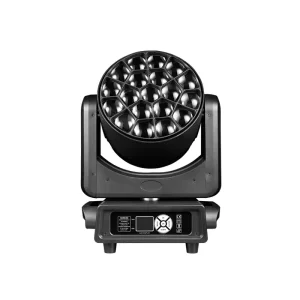
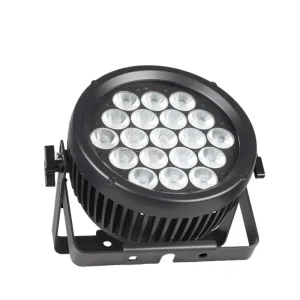
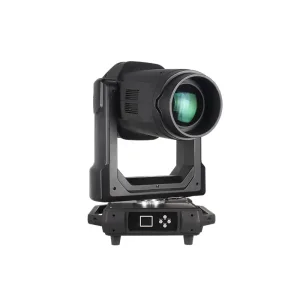
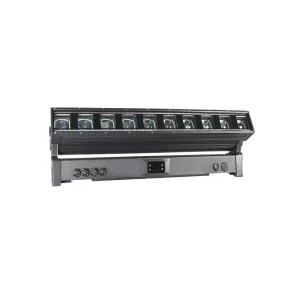
Select from our heavy-duty product variants below to complete your architectural or stage light infrastructure.
 iTOPLITE